
The Iran conflict triggered the biggest oil shock in decades. We analyze the impact on markets, currencies, and what it means for traders.
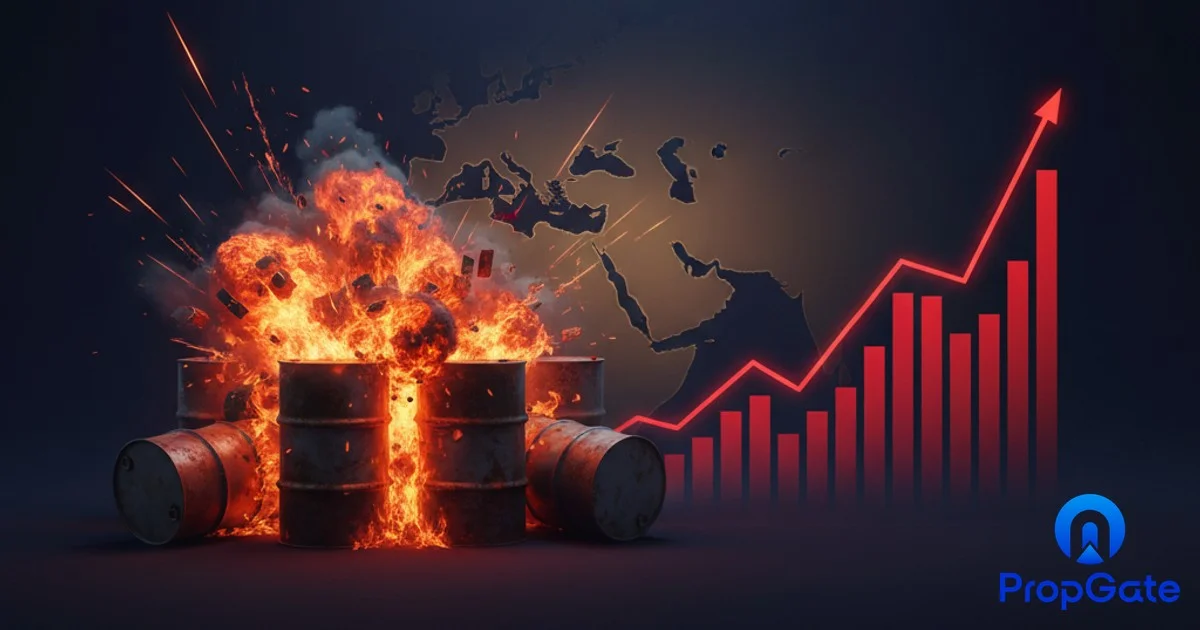
On February 28, 2026, joint US-Israeli airstrikes on Iran fundamentally changed the balance of power in global energy markets. Brent crude surged over 49% in a single month, approaching $120 per barrel.
The closure of the Strait of Hormuz - through which 84% of crude oil and 83% of LNG bound for Asia flows - triggered panic among investors and a wave of sell-offs across global exchanges.
Oil & Gas: Brent is hovering around $120/bbl. Analysts don't rule out $150-200 per barrel if the conflict drags on.
Equities: The S&P 500 is down 3% year-to-date, but Asian markets have been hit much harder. South Korea's KOSPI suffered its worst crash since 2008 - a 12% single-day drop.
Gold: Surpassed $5,100 per ounce and remains at all-time highs. J.P. Morgan analysts forecast as high as $6,300 by year-end.
EUR/USD: The euro weakened to $1.15 as the dollar strengthened on safe-haven demand.
The shutdown of Qatari LNG production - accounting for nearly 20% of global supply - threatens Europe's energy stability. However, analysts note that Europe is far more energy-diversified today than in 2022.
In a moderate scenario, eurozone inflation would briefly peak at 2.5% before falling below 2% by summer. In a severe scenario, it could exceed 3% with GDP growing just 0.8%.
Volatility is the environment where professional risk management matters most. When markets panic, experienced traders see opportunity - in oil, gold, and currency pairs alike.
At PropGate, we manage portfolios based on risk models calibrated to current market conditions. High volatility isn't a problem - it's part of the strategy.
Market data as of publication date. Past performance does not guarantee future results.
Learn how prop trading works or let us handle the challenge for you.